

Most homeowners choose a plumber, roofer or HVAC company from the first screen of Google. That screen usually opens with the map pack: three businesses, their star ratings and a call button. Earning a place there, and in the organic results below it, is what local SEO strategies are for. None of the ten below depend on the calendar or the latest algorithm rumor. They are the habits we see working, year after year, for home service companies that rank.
Each of these local SEO strategies is something you can start this week. Some take an afternoon. Others are routines you keep for years. If you want the wider picture first, including paid ads and budgeting, start with our complete guide to home service marketing.
In this post
- How Google Decides Who Gets Into the Map Pack
- 10 Local SEO Strategies That Hold Up
- How Long Before Local Rankings Improve
How Google Decides Who Gets Into the Map Pack
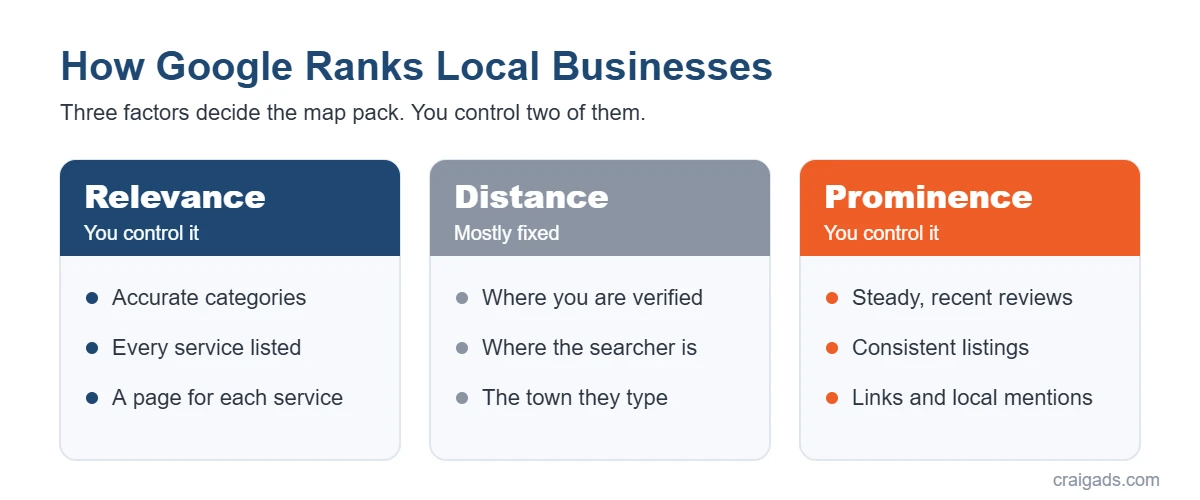
Google says local results are based mainly on three factors: relevance, distance and prominence. Relevance is how well your profile and website match the search. Distance is how far you are from the searcher, or from the town they typed. Prominence is how well known and trusted your business is, online and off.
A service area business cannot change distance much, since you are verified where you are. The local SEO strategies below work on the two factors you can control. Most of them strengthen relevance and prominence at the same time.
10 Local SEO Strategies That Hold Up
1. Build Your Google Business Profile Around Real Services
Of all the local SEO strategies here, your profile is the biggest single lever. Pick the primary category that best describes your core business, then add only the secondary categories you truly offer. Google’s guidelines for representing your business ask for the fewest categories that describe what you do. List every service with a short description, set an accurate service area and keep your hours current. Use your real business name, with no keywords added. Our Google Business Profile optimization checklist covers every field.
2. Earn Reviews Steadily, Then Answer Every One
Prominence leans heavily on reviews. In our experience, a steady flow of new reviews does more than a burst of twenty followed by a quiet year. Build the request into the job itself: the technician mentions it on site, and a text with a direct link follows the same day. Reply to every review with a detail about the job. Thoughtful replies show future customers how you handle problems.
3. Keep Your Business Information Consistent Everywhere
Consistent listings are one of the quieter local SEO strategies, but they matter. Your name, address and phone number appear on dozens of sites, from directories to map apps. When those details disagree, customers get confused and search engines get mixed signals about which version is correct. Start with the listings that matter most for home services, such as Apple Business Connect, Bing Places, Yelp, Nextdoor and the Better Business Bureau. Fix old phone numbers and past addresses first, since they cause the most trouble.
4. Give Every Core Service Its Own Page
A single services page that lists everything you do cannot rank for all of it. A homeowner searching for water heater replacement wants a page about water heater replacement. Build one page per core service that explains the job, the signs a customer needs it and how your crew handles it. Add real job photos and an obvious way to call. Your Google Business Profile and the rest of your local SEO strategies then have a stronger website behind them.
5. Build Service Area Pages With Real Local Substance
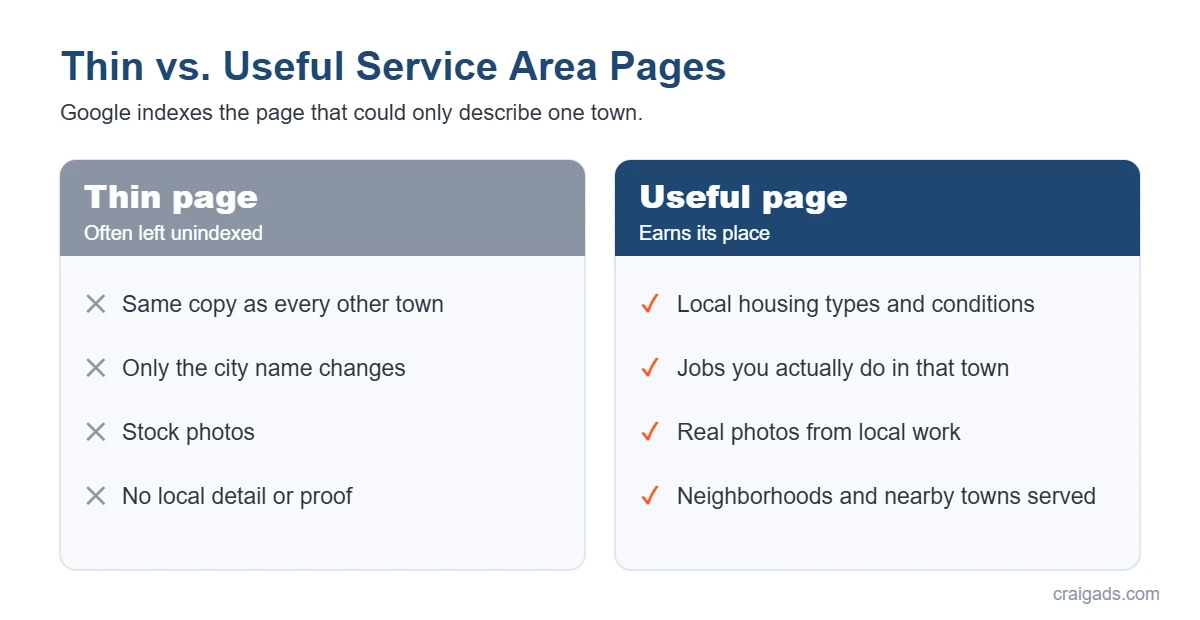
Town pages can work, but only when each one says something a reader could not find on the next one. We see the alternative in Google Search Console every month. Near-identical city pages with only the name swapped sit under “Crawled, currently not indexed” and never rank. Useful service area pages cover the local housing stock, local conditions and the jobs you actually do there. If you cannot write that for a town yet, keep it on a combined service area page until you can.
6. Get the On-Page Basics Right
On-page work is the least glamorous of these local SEO strategies, and one of the most skipped. Each page needs a clear title tag with the service and main town, one H1 and a meta description written like a short ad. Use headings that describe each section rather than clever phrases. Link related pages to each other, so a reader on your drain cleaning page can reach your sewer line page. Make sure every page loads quickly on a phone, since many customers find you in the middle of a problem.
7. Add Local Business and Service Schema
Schema is code that tells search engines what your business is, where it operates and what it offers. Google documents how to use LocalBusiness structured data. Add it once across the site, then mark up service pages with Service schema and FAQ sections with FAQ schema. Keep every detail identical to your Google Business Profile. Schema will not rescue a weak page, but it removes guesswork from a good one.
8. Publish Local Content That Answers Real Questions
The questions your crew hears every week are where your blog topics should come from. How long does a roof replacement take? Should a 15-year-old furnace be repaired or replaced? What does a sewer camera inspection show? Answer them plainly, from experience, and link each post to the matching service page. Clear answers also help with the AI tools customers now use to research a job, which our AI search visibility guide covers.
9. Post Photos and Updates Every Week
Fresh photos and posts show Google and customers that your business is active. Upload real job photos rather than stock images, each with a short note about the work. Share seasonal reminders, such as gutter cleaning before winter or AC tune-ups before summer. Of all ten local SEO strategies, this is the easiest one to let slide. We aim for one post a week with our clients. A pace you can keep beats an ambitious one you drop by March.
10. Track Rankings, Calls and Indexing Every Month
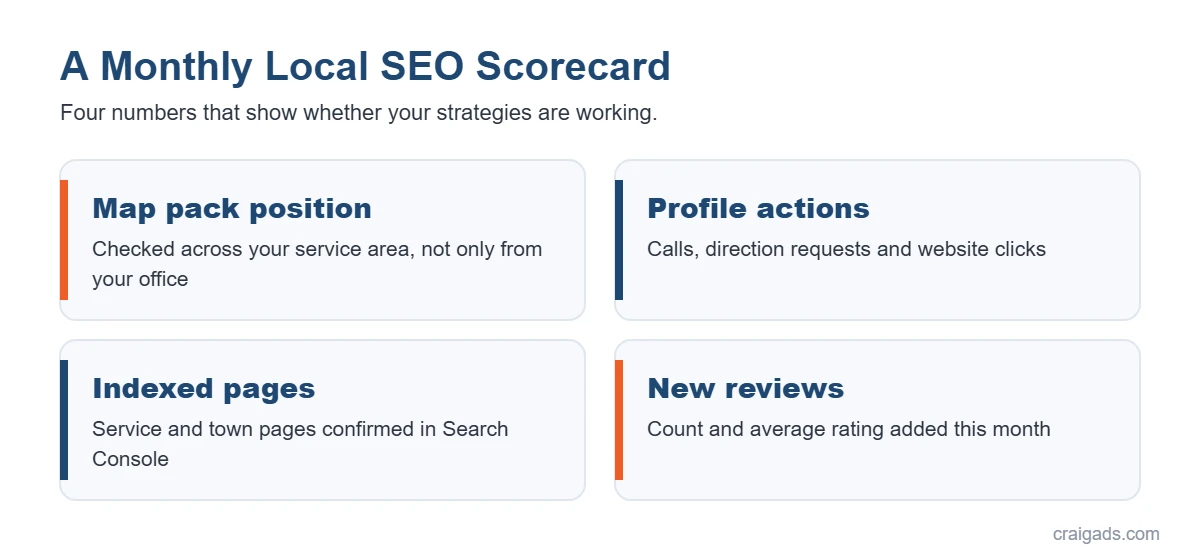
Local SEO strategies only pay off when you can see what moved. Check where you appear in the map pack across your whole service area, not just from your office. Watch calls, direction requests and website clicks from your profile. In Search Console, confirm that your service and town pages are indexed. Our free local search results checker shows what customers see when they search from any town or ZIP code.
How Long Before Local Rankings Improve
Some changes show up quickly. Correcting categories, filling in services and fixing inconsistent listings can shift map pack visibility within a few weeks. Website changes usually take several months, because Google has to recrawl and reassess each page. Reviews and content compound over time. Judge your local SEO strategies by the quarter, not the week, and expect local rankings to vary from town to town across your service area.
Get a Local SEO Plan Built Around Your Service Area
CraigAds is a digital marketing agency in Carrollton, Georgia, helping home service companies across the country earn more calls from local search. We will review your profile, website and listings, then show you which local SEO strategies to start with. Schedule a free consultation to get started.

Craig McIlvain
Craig McIlvain is the owner of CraigAds, a collaborative digital marketing agency in Carrollton, Georgia that helps local businesses, franchises, and home-service companies get found and get chosen. With a master’s in applied psychology from USC and more than 2,000 local businesses served, Craig built his approach around one idea: people don’t decide based on information — they decide based on how something makes them feel. He works alongside clients rather than hiding behind dashboards, and he writes about local advertising, SEO, and the real reason customers pick one business over another. At home, he plays guitar and makes electronic music — and gets outvoted by his wife Julia and their kids on which Disney movie they’re watching next.